
Docking stations have evolved over the past few years and have more and more become a requirement within the workplace as well as at home. Yet as things get more popular it inevitably means that the market will become over-saturated. Making it harder for first-time buyers to know what to buy, whether it will work best for them or not. So, to help this article will be looking at two of Tekeurope’s best selling docking stations. The Lenovo ThinkPad USB-C Dock Gen 2 and the HP USB-C Universal Dock. We will be comparing these two to help you decide which one to buy in the future.
Specifications:
Colour:
Dimensions (WxDxH):
Docking Interface:
Weight:
Localisation:
Networking:
Power:
40AS0090UK
Black
17.1cm x 8cm x 3cm
USB-C
340g
English / United Kingdom
Gigabit Ethernet
The Lenovo offers 65W of power with its standard 90W power adapter via a USB-C output. But if you buy their slim tip power adapter (135W) the docker can output 100W of power if required for your device.
3DV65AA
Black
20cm x 7cm x 2.8cm
USB-C
350g
English / United Kingdom
Gigabit Ethernet
The HP outputs up to a maximum of 60W of power for any laptop or tablet compatible with its USB-C port or select notepads through its HP 4.5mm and USB adapter.
Ports:
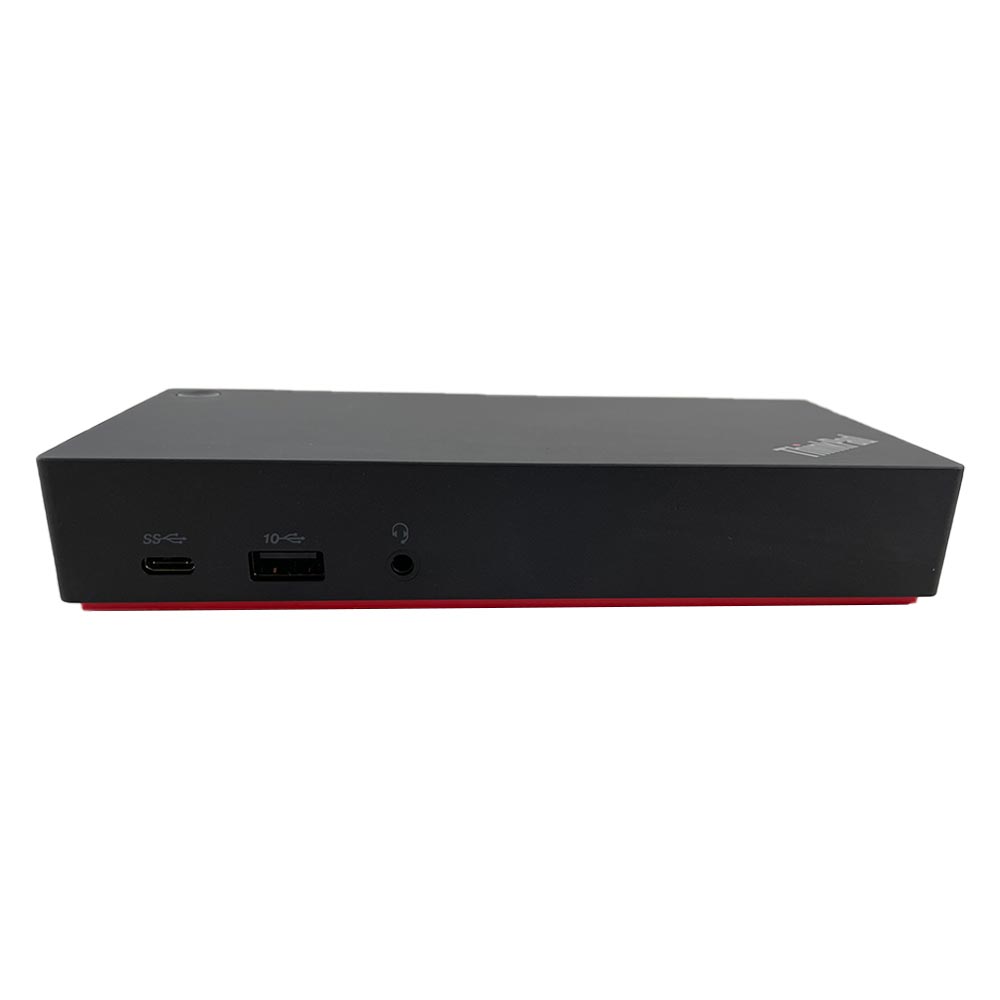
The USB ports available on the Lenovo are three USB 3.1 ports as well as two USB 2.0 ports with a bonus USB-C. The Lenovo USB-C docker has 2 display ports as well as one HDMI port, it also includes a standard ethernet port as well.
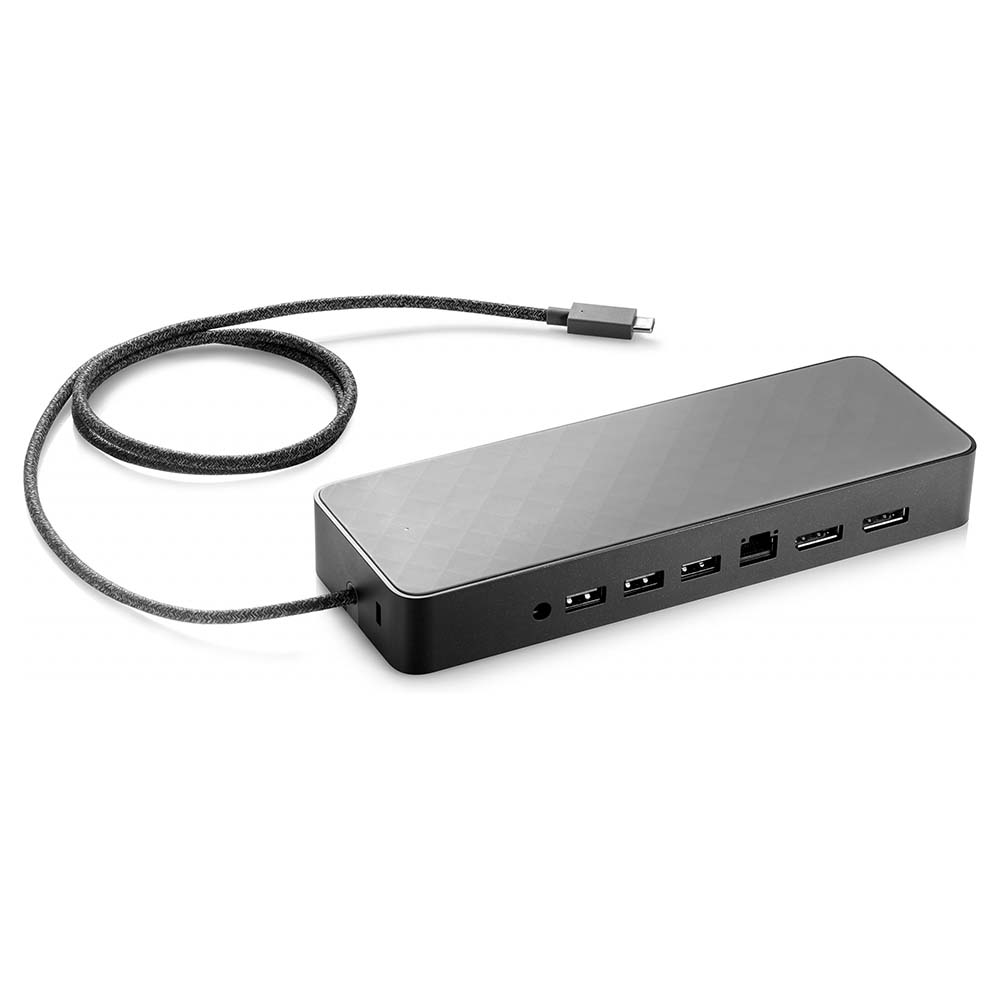
The HP includes a USB 3.0 charging port alongside three USB 2.0 charging ports for any compatible devices. As for the display, the HP has dual display ports for up to 4K quality, it ethernet port for network management.
Overview
Looking at the two docking stations they may actually look the same, from their design to the overall specifications. But when you look closely you can really see which one of these stations shines the most. For example, when looking at the Power output, the Lenovo docker outputs 5W more than the HP. Although this is minor it’s not the only difference in power the Lenovo can also increase its power further. Lenovo offers a 135W AC that can make the max output of the docker 100W. although you have to get together more money to do this, it does mean that the Lenovo docking station will work on more devices. The Lenovo station also operates at a lower maximum temperature five degrees lower than HP.
The Lenovo USB-C has a large number of USB slots using three USB 3.0s and two USB 2.0. With the HP station only having four USB ports with one of them being a USB 3.0 it does mean that it’s behind when comparing it to the Lenovo station. Even though both have dual display ports yet again Lenovo docker offers another bonus of having an HDMI port extra, allowing for more flexibility when connecting monitors and other screens.
In the end, when comparing both of the devices the Lenovo USB-C docking station is the better of the two. Even though they are both very similar at first the Lenovo is fundamentally more efficient and useful docker with its faster USB ports, low temperatures and higher power output. Even though the Lenovo one is the better of the two, the HP is still a perfectly good docking station but if you want one with more power then the Lenovo is what you should go for.




